When “Plume” Is Really Mold – A Story That Happens Too Often

A few days ago a husband and wife team walked into Smoke and Joe Cigar Lounge looking like they’d just been through the wringer. They’d come from another cigar retailer which shall not be named, where they spotted something on cigars that made them stop dead: raised, patchy, off-color spots that didn’t look right.
They asked the employee what it was.
The answer came fast: the oldest hustle in the book when there’s a mold problem in the humidor: “Don’t worry, that’s just plume.”
They didn’t buy it. They got in the car because their gut told them they were being sold a line.
The second they described it, it was clear this wasn’t the fine crystalline dust of true plume. It was classic mold, the kind that shows up when humidity climbs too high, temperature drifts, or air movement gets neglected (our humidor ceiling fans are always running in reverse for a reason).
Spotting the Difference: Real Plume vs. Dangerous Mold
Here’s the dead-simple way to tell them apart in seconds—commit this to memory and you’ll never get hustled:
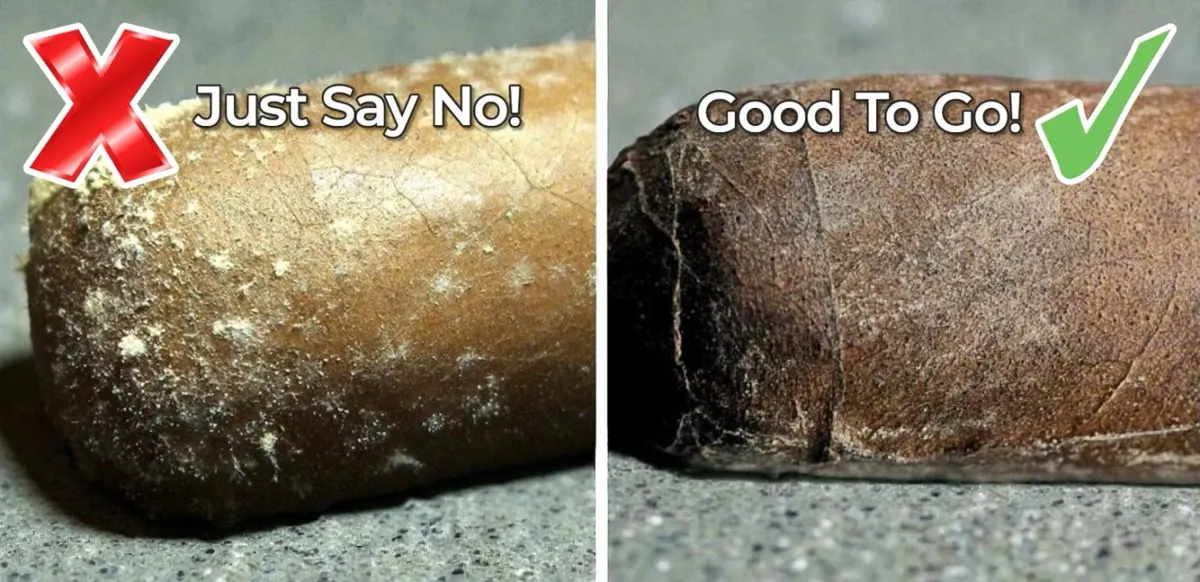
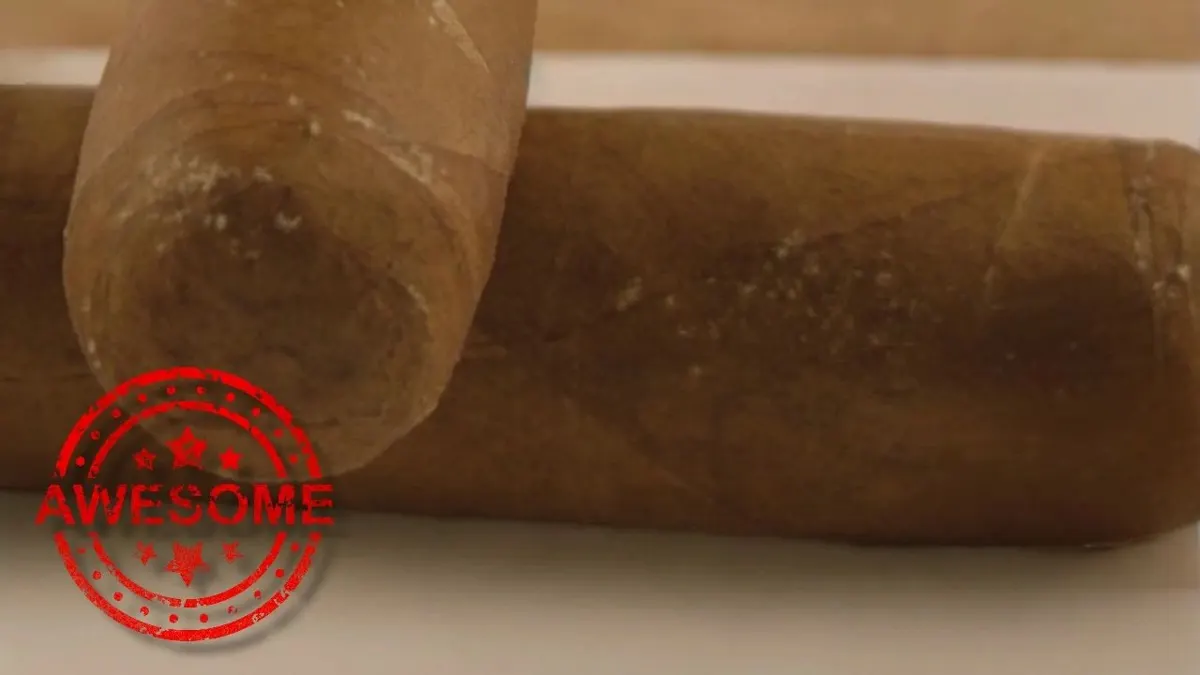
True Plume (Bloom)
– Looks like ultra-fine white powder or delicate frost
– Feels silky or crystalline, almost like powdered sugar
– Wipes or brushes off easily with a fingertip and leaves no residue
– Evenly distributed, usually on darker wrappers after years of perfect aging
– No color other than pure white; never blue, green, or gray
– Smells clean—like rich tobacco, never musty
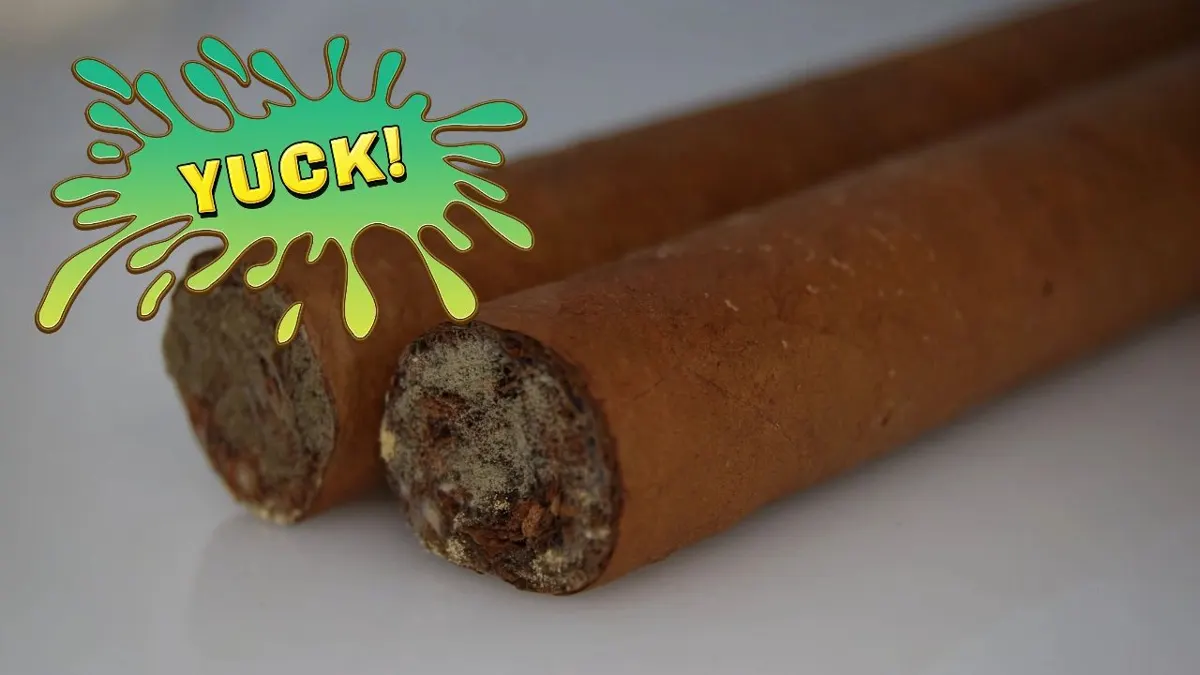
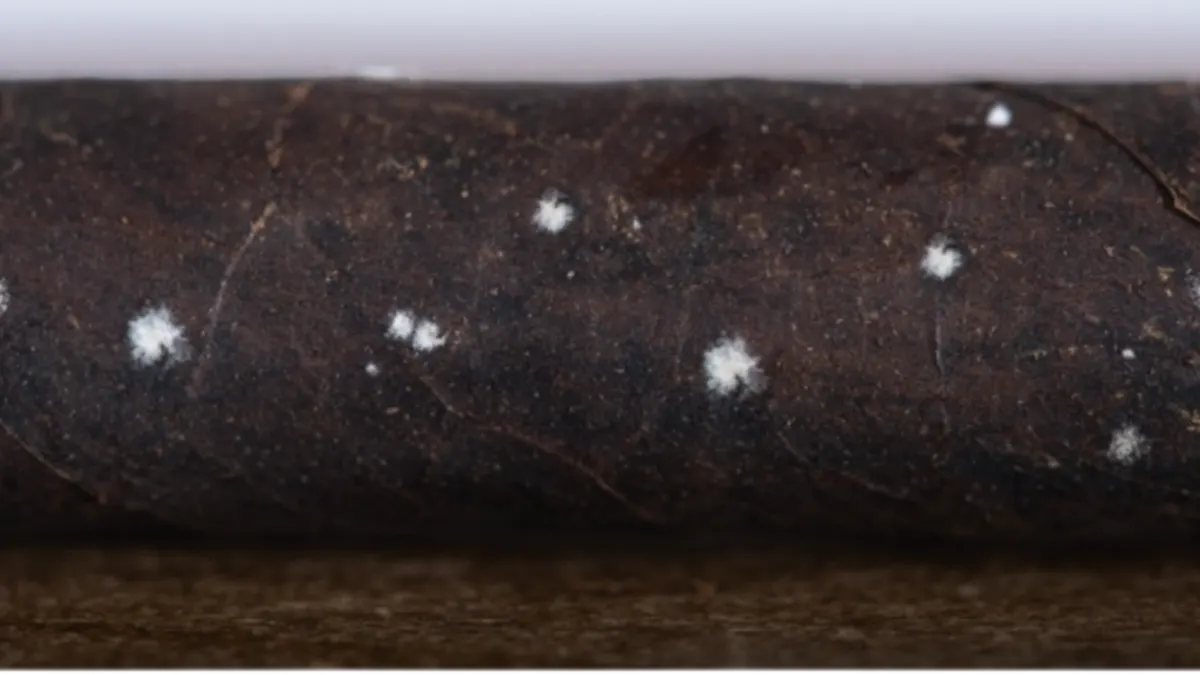
Mold (The Red Flag)
– Appears fuzzy, hairy, or cotton-like (you can often see individual “hairs” under light)
– Raised spots that won’t brush off cleanly; they smear or leave marks
– Irregular patches or clusters instead of uniform dusting
– Colors are wrong: white but also blue, green, gray, or even black specks
– Often accompanied by a musty or basement smell
– Shows up fast on cigars that have been too wet or too warm – ”Fuzz“ on the foot? DO NOT SMOKE IT!
Bottom line: if it looks like it’s growing instead of resting on the leaf, it’s mold—full stop. True plume is rare, beautiful, and harmless. Mold is common, ugly, and a hard no.
Why Mold Is a Bigger Deal Than Most People Realize
In a walk-in humidor, mold doesn’t stay in one place. It spreads—cigar to cigar, box to cedar—and once it takes hold in the wood, well… sh*t.
The Old 70/70 Rule vs. What Actually Works Today
A lot of places with walk-in humidors still run at 70% humidity and 70°F because “that’s how it’s always been done.” The reality is that standard was created decades ago for much smaller, simpler setups, and different tobacco.
In a modern commercial walk-in today it creates problems:
- 70% humidity today loads cigars with more moisture than they can handle, especially with doors opening and closing all day. The leaf gets soft and spongy and makes for a less desirable experice.
- 70°F is getting close to the temperature where tobacco beetles hatch. A couple of warmer days in the humidor with higher humidity because management isn’t paying attention, and the once dormant beetle larva now has an incubator and can wipe out inventory pretty quick.
- Today’s cigars burn cleaner and taste better when they’re kept cooler and drier.
- A large walk-in with thousands of cigars behaves completely differently than a desktop humidor and even an open air lounge where the store itself is the “humidor”. The old rule just doesn’t scale the same.
That’s why in our walk-in we hold steady at 65% RH and 67°F, with constant air movement, multiple daily checks (cigar smoking of course), and live digital monitoring. It’s not about being different—it’s about keeping cigars safe and tasting the way they’re supposed to.
The Couple Left With Answers Instead of Doubts
So with the mold vs. plume questioning, taking the time to listen, asked questions, and explained exactly what they’d seen and why it mattered. When they walked out, they understood the difference between real plume and mold, and they knew what to watch for going forward.
No hard sell, no pressure—just straight talk, clarity and a few mold free cigars for them to enjoy.

Come try it in person. 29850 N. Tatum Blvd., Unit 115, Cave Creek, AZ 85331 · 21+